Hans sacrifices his chance at the skating prize for Gretel
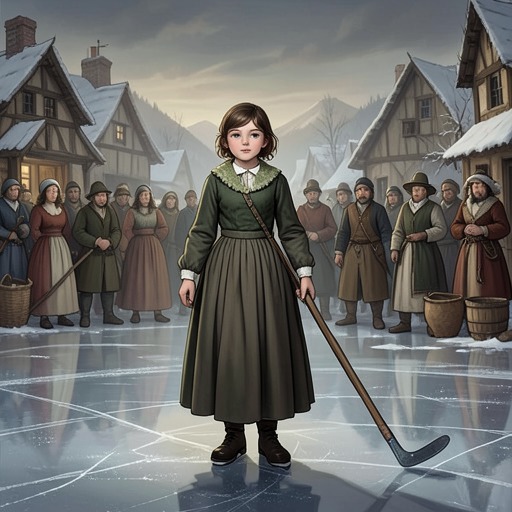
Hans Brinker, or The Silver SkatesHans sacrifices his chance at the skating prize for Gretel when Hilda van Gleck gives the Brinker siblings eight kwartjes, enough for only one pair of skates. Although Hans longs to race and believes good steel runners could make him one of the fastest boys on the canal, he decides that Gretel should have the skates. The choice is not a vague promise of generosity: he refuses the possibility of sharing an ill-fitting pair, urges her to practice, and makes her opportunity the purpose of the gift.
The Gift and Its Limits
Hans and Gretel have been watching the other children skate, but their wooden skates are a poor substitute for proper runners. Hans explains that the wood becomes damp and sticks, leaving them able to skate only a few strokes with the others. Hilda listens to the siblings and asks which is the better skater. Gretel answers immediately that Hans is.
Hilda has only eight kwartjes left from her monthly allowance, which she has spent largely on lace and finery. She recognizes that the money cannot buy two pairs, or even one good pair, and gives it to Hans with instructions that the siblings decide between themselves who has the best chance of winning the race. Her gift is generous but constrained: it creates an opportunity for one child, while leaving the choice of recipient to the two children who know one another’s abilities and needs.
Hans first tries to call Hilda back as she skates away, stumbling because one of his skate strings is untied. He accepts that further protest will not change her mind. Gretel delights in Hilda’s kindness and imagines that the family has at last received good luck. The gift thus arrives amid the Brinker family’s poverty, where a small sum can determine whether either sibling can participate in the coming contest.
Choosing Gretel’s Chance
Hans considers what the money could mean for him. He has known about the race and has keenly wanted the chance to test himself against the other children. With steel runners, he feels confident that he could outdistance most of the boys on the canal. Gretel, however, has a strong, lithe frame; he judges that a week of practice on good skates could make her better than Rychie Korbes or even Katrinka Flack. That comparison changes the decision: the money can serve not just as a chance for him to race, but as a serious opportunity for Gretel.
He tells her that he can wait until he has saved enough to buy himself a fine pair and that she should have the skates. Gretel hesitates, arguing that Hilda gave the money to Hans and that taking it would be wrong. Her reluctance makes the decision a negotiation between siblings rather than a simple act of giving: she does not want to profit at his expense, while he insists that her chance matters more than his immediate wish.
Gretel then proposes a compromise. They could buy skates slightly too small for Hans and slightly too large for her, and take turns using them. The suggestion would let both share the gift, but Hans rejects it. He remembers how Gretel stumbled in their wooden skates before he curved their ends, and reasons that a pair too large would not work for her. For him, the issue is not merely who gets to possess the new equipment: the skates must fit Gretel exactly if she is to practice and compete effectively.
From Self-Denial to Practical Support
Hans’s choice costs him a real opportunity. The narration stresses that he has never wanted skates so intensely and that the possibility of entering the race has been a long-held desire. Yet once he recognizes Gretel’s prospects, he pushes aside the temptation to keep the money for himself. He does not deny that he wants to race; he decides that his sister should have the better chance available to them.
His decision also extends beyond handing over the money. He tells Gretel to practice whenever she can before the twentieth, making training part of the gift’s purpose. He imagines her as a potential winner and speaks of her as the one who should claim the silver skates. The prospect gives Gretel delight, while Hans’s practical instructions keep that hope connected to the work required to make it possible.
Elsewhere, Hans considers earning money through work on a chain and says that, if he earns it, he wants it spent on wool for Gretel’s warm jacket. The distinction is revealing: even when he is thinking about his own labor and its proceeds, he directs the benefit toward his sister’s needs. His concern for her warmth stands alongside his decision to secure her a chance on the ice; care takes the form both of material provision and of making room for her ambition.
A Pattern of Giving Up His Place
The choice over the skates belongs to a broader pattern of Hans placing another person’s need before his own immediate advantage. When he finds Peter van Holp’s lost purse, he returns it and refuses Peter’s offer to divide the money. Peter is moved by the refusal, and Hans’s honesty earns his respect without turning the returned purse into a reward.
That same generosity becomes visible during the skating race. When Peter damages a skate strap while trying to make a new hole in it, Hans takes off his own skate and offers his strap. Peter initially protests, but Hans insists, saying there is no time to lose and that he will not race. He presses Peter to join the contestants, judging that the contest lies between Peter and Carl Schummel. Peter finally accepts the help and reaches his place just as the signal falls.
The race-day gesture echoes the earlier decision for Gretel without making the two acts identical. For Gretel, Hans gives up the equipment that would have allowed him to compete; for Peter, he gives up his own place at the start by surrendering a necessary strap. In both cases, he converts a personal chance into practical assistance. The episode with Gretel establishes the pattern especially clearly: his ambition is real, but he can relinquish its immediate reward when someone he cares about has a better claim on the opportunity.
Significance
The sacrifice makes sibling affection concrete through scarce objects: eight kwartjes, a pair of skates, and the warm jacket Hans hopes to provide. Hilda’s gift opens a choice rather than resolving the siblings’ hardship, and Hans answers that constraint by judging who can use the opportunity most effectively. His decision is affectionate, but it is also perceptive: he recognizes Gretel’s skating potential and insists on equipment that fits her rather than settling for a compromise that would hinder her.
The scene therefore presents generosity as more than giving something away. Hans weighs his own long-standing desire against Gretel’s prospects, refuses an arrangement that would undermine her practice, and supports her with a clear expectation that she train for the December twentieth race. His self-denial does not erase his ambition; it shows what he is willing to do with it. In placing Gretel’s chance ahead of his own, he makes the family’s limited means serve her possibility.